
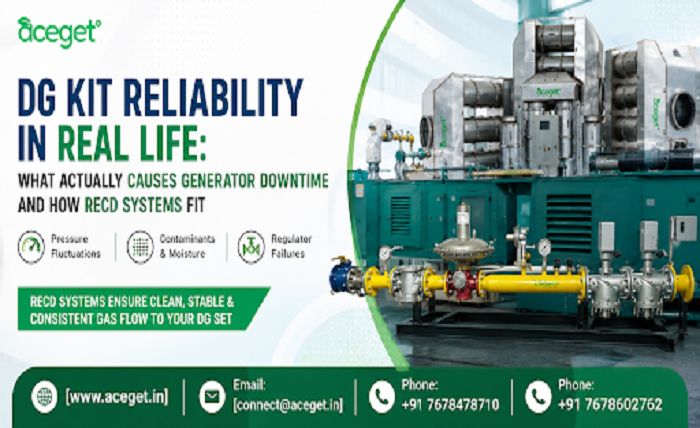
Most businesses assume diesel generator downtime is caused by engine failure or major mechanical issues. In reality, a large number of DG Kit breakdowns are linked to smaller, overlooked operational factors that build up over time.
As organizations depend more heavily on backup power for continuity, the expectations from a Diesel Generator Kit have also increased. It is no longer enough for a generator to simply start during a power outage; it must operate reliably, efficiently, and consistently under varying conditions.
This is where modern solutions like the RECD DG kit and Dual Fuel Kit from Aceget Private Limited become important. While these systems are primarily known for emission reduction and fuel optimization, they also play a subtle but important role in improving overall generator reliability.
This blog explores the real reasons behind DG Kit downtime and how emission control systems integrate into long-term operational stability.
The Hidden Reality of DG Kit Downtime
When a generator stops working, the immediate assumption is usually engine failure. However, field data from industrial and commercial operations shows a different pattern.
Many downtime events are linked to:
- Exhaust system blockages
- Fuel quality inconsistencies
- Improper load handling
- Heat buildup issues
- Sensor or feedback inconsistencies
- Maintenance delays
These issues may not immediately stop a generator, but they gradually reduce reliability until failure occurs.
Understanding these root causes is essential for improving the performance of any DG Kit setup.
Exhaust System Health: An Overlooked Reliability Factor
The exhaust system is often treated as a passive component, but it plays a major role in generator performance.
When an RECD in DG kit is installed, it becomes part of this exhaust pathway. If not properly managed, it can contribute to reliability issues such as:
- Increased backpressure over time
- Soot accumulation in filtration units
- Reduced exhaust flow efficiency
- Irregular regeneration cycles
However, when properly engineered, the RECD DG kit actually improves system stability by controlling emissions and maintaining cleaner exhaust pathways.
Aceget designs systems to ensure exhaust health supports long-term DG Kit reliability rather than restricting it.
Fuel Quality: The Silent Cause of Generator Problems
Fuel quality is one of the most underestimated factors affecting Diesel Generator Kit performance.
Poor-quality diesel can lead to:
- Increased carbon deposits
- Faster filter clogging
- Irregular combustion patterns
- Higher emission levels
These issues indirectly affect both engine performance and RECD efficiency.
When paired with a Dual Fuel Kit, fuel variability can be managed more effectively by distributing load between diesel and gaseous fuels such as CNG, PNG, LNG, LPG, or biogas.
This flexibility helps stabilize combustion behavior and improves long-term reliability.
Load Instability and Its Impact on DG Kit Performance
Generators are designed to handle variable loads, but extreme fluctuations can create stress on the system.
Common issues caused by unstable load patterns include:
- Sudden temperature changes
- Irregular fuel consumption
- Inconsistent emission output
- Increased mechanical strain
An RECD DG kit must adapt to these fluctuations while maintaining consistent emission control.
Aceget accounts for real-world load behavior during system design to ensure that DG Kit performance remains stable even under unpredictable operating conditions.
Heat Management: A Major Contributor to Long-Term Stability
Excess heat is one of the primary factors that slowly reduces generator reliability.
Inadequate heat management can lead to:
- Reduced engine efficiency
- Faster wear of internal components
- Decreased RECD performance
- System instability under continuous operation
Proper DG Kit design ensures that heat is distributed and managed effectively across both the engine and emission control system.
When temperature balance is maintained, both the Diesel Generator Kit and RECD system operate more reliably over time.
How RECD Systems Improve Overall Generator Stability
Although RECD DG kit systems are primarily designed for emission reduction, they indirectly support operational stability in several ways:
Cleaner Exhaust Flow
Reduces buildup of harmful residues in the exhaust pathway.
Controlled Combustion By-Products
Helps manage particulate output more effectively.
System Monitoring Feedback
Modern RECD systems provide indicators that help identify performance trends early.
Stable Operating Conditions
Encourages more consistent exhaust behavior across load variations.
These factors contribute to improved long-term reliability of the DG Kit system.
Maintenance Delays: The Most Common Operational Risk
One of the biggest reasons for generator downtime is delayed maintenance.
Many organizations continue operating DG sets beyond recommended service intervals, leading to:
- Filter saturation
- Reduced exhaust efficiency
- Increased system strain
- Unexpected shutdowns
An RECD in DG kit requires routine checks to ensure optimal performance, but when maintained properly, it helps stabilize the overall system rather than increase complexity.
Aceget supports structured maintenance planning to minimize such risks.
Integration of Dual Fuel Systems and Reliability Benefits
Dual Fuel Kit technology adds another layer of stability to generator operations.
By allowing a Diesel Generator Kit to operate using both diesel and gaseous fuels, it reduces dependence on a single energy source.
This leads to:
- More consistent combustion behavior
- Reduced stress on fuel systems
- Lower variability in engine performance
- Improved adaptability during fuel supply changes
When combined with RECD technology, dual fuel systems create a more balanced operational environment for DG Kit infrastructure.
Why Small Issues Become Major Downtime Events
Most generator failures do not happen suddenly. They develop gradually through a chain of small issues:
- Slight increase in exhaust resistance
- Gradual reduction in combustion efficiency
- Increased soot or residue formation
- Delayed maintenance response
- Eventual system shutdown
By the time downtime occurs, the root cause has usually been developing for weeks or months.
This is why proactive system design and monitoring are essential for DG Kit reliability.
The Role of System Design in Preventing Downtime
Reliability is not just about maintenance, it starts at the design stage.
A well-engineered DG Kit should ensure:
- Balanced exhaust flow with RECD integration
- Stable thermal conditions
- Controlled backpressure levels
- Compatibility between engine and emission system
- Flexibility for load variations
Aceget focuses on these design principles to reduce long-term operational risks.
Conclusion
DG Kit downtime is rarely caused by a single failure point. Instead, it is usually the result of multiple small inefficiencies that build up over time.
Understanding these factors helps businesses manage their Diesel Generator Kit infrastructure more effectively and reduce unexpected breakdowns.
While the RECD DG kit is primarily known for emission control, and the Dual Fuel Kit for fuel optimization, both technologies also contribute to improving long-term reliability when properly integrated into system design.
Aceget Private Limited focuses on building DG Kit solutions that not only meet environmental expectations but also support stable, real-world operation. By addressing exhaust behavior, fuel flexibility, load variation, and system design together, businesses can achieve more dependable generator performance and reduced downtime risk over the long term.